Lucie Masson | Women’s CoachAugust 18, 2025
According to Shaktism, the branch of Vedic philosophy I explore, the Divine is primarily defined as the Goddess, called Shakti or Devi, who embodies power and is considered ultimate reality. This tradition venerates the divine feminine, often seen as the source of all creation and energy. Shakti is the driving force behind all action, as she generates space and time. She is also the path to salvation, since, as the mother of the Universe, she possesses for humankind the love, compassion, and devotion that a mother has for her children.
This conception of feminine spirituality fascinates me because it reconciles me with my own femininity. It is the feminine aspect that invents, creates, loves, nourishes, and helps men grow. Woman possesses the most powerful force that exists, the power of creation. From this original concept of Shakti are born the other goddesses who possess all the qualities we find within ourselves: intuition, unconditional love, compassion, knowledge, discipline, and strength of character. Yes, Kali, seated on her fierce lion, is the most powerful destroyer when it comes to evil, bad habits, and the inner demons that distance us from our pure nature. We too are created in her image: each of us, regardless of our gender or sex, has this principle within us. We simply need to develop it and reconcile ourselves with it.

Shakti reconciles me with my own humanity: our human mothers are not perfect, but they gave birth to us and nurtured us; they are part of us. We harbor resentment toward them because our ego is too hardened to allow room for unconditional love. When we connect with Shakti, we rediscover this compassion, detached from the ego. We are also imperfect mothers to our children, and yet we love them. Shakti is the Mother who comforts us, strengthens us, and disciplines us so that our lives become a quest for harmony.
The Catholic religion certainly has the veneration of Mary the Blessed Virgin, to which I was particularly attached growing up because it offers this image of a mother to whom one can confide. However, the status given to Mary has been relegated to the background for centuries, with the cultural consequence of relegating women to the background. Even today, with the contributions of Vatican II, which are the most modern, they remain ambiguous regarding her status: “Exalted because of the merits of her Son and united to him by a close and indissoluble bond, she is endowed with the high office and dignity of being the Mother of the Son of God; for this reason, she is also the beloved daughter of the Father and the temple of the Holy Spirit.” ” wrote the Lumen Gentium of 1964. Mary the Holy Virgin is the beloved daughter of the Father, but still a human woman who was promoted by the merits of the Son… Let’s not even talk about religions that do not even have a single place for women near or close to God, and whose consequences on cultural practices towards women are well known.
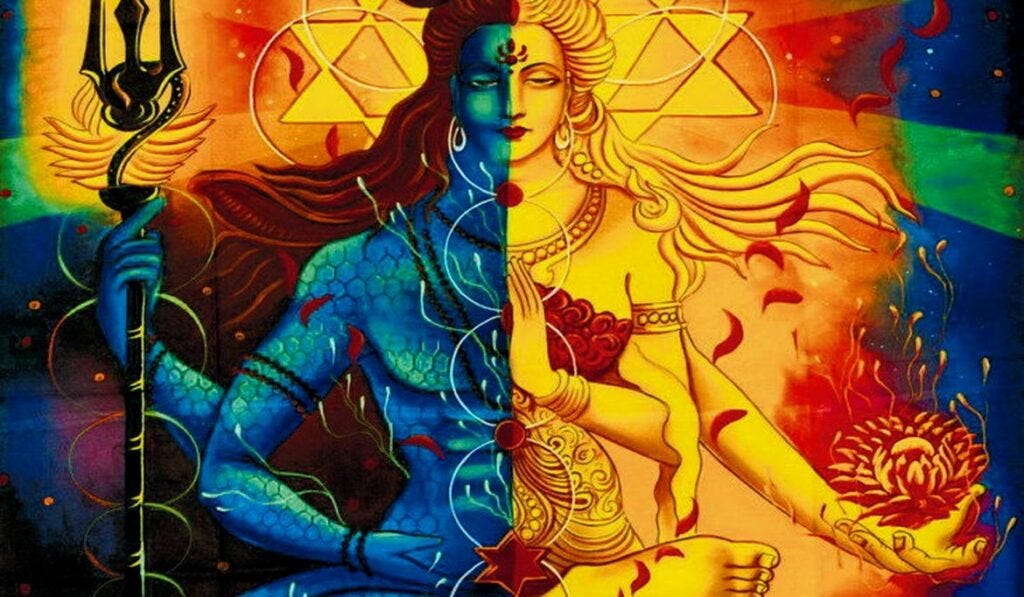
Vedic philosophy goes much further, confidently positing that Shakti is the source of all creation and all energy. If the human mother gives birth to children, and God created humankind in his image, then God is also feminine. More precisely, he is the union of the masculine and feminine principles of nature (as seen here below), and one cannot exist without the other; thus, there is perfect balance between Mother and Father. As with humankind, if we achieve this balance within ourselves, then our world finds its equilibrium and serenity.
We’re far from it, but not by much. It’s certainly a quest we can all aspire to. If you too aspire to harmony between men and women, subscribe, comment, and keep up the good work.
Thanks for reading Shanti Maman! Subscribe for free to receive new posts and support my work.