Lucie Masson | Women’s CoachDec. 01, 2025
In the 1992 film adaptation of Pierre Lacombe’s novel, the handsome Patrick Swayze, troubled by the mystery of death and searching for meaning, decides to embark on a spiritual journey to India to find enlightenment. However, his goal is diverted when he is rescued by slum dwellers and finds himself living among them. By helping them in turn, he forms bonds with them and rediscovers a sense of purpose. Observing so many men and women around him whose lives are far more difficult than his own, yet who continue to face each day with confidence, he draws new energy to move forward and manages to overcome his depression.
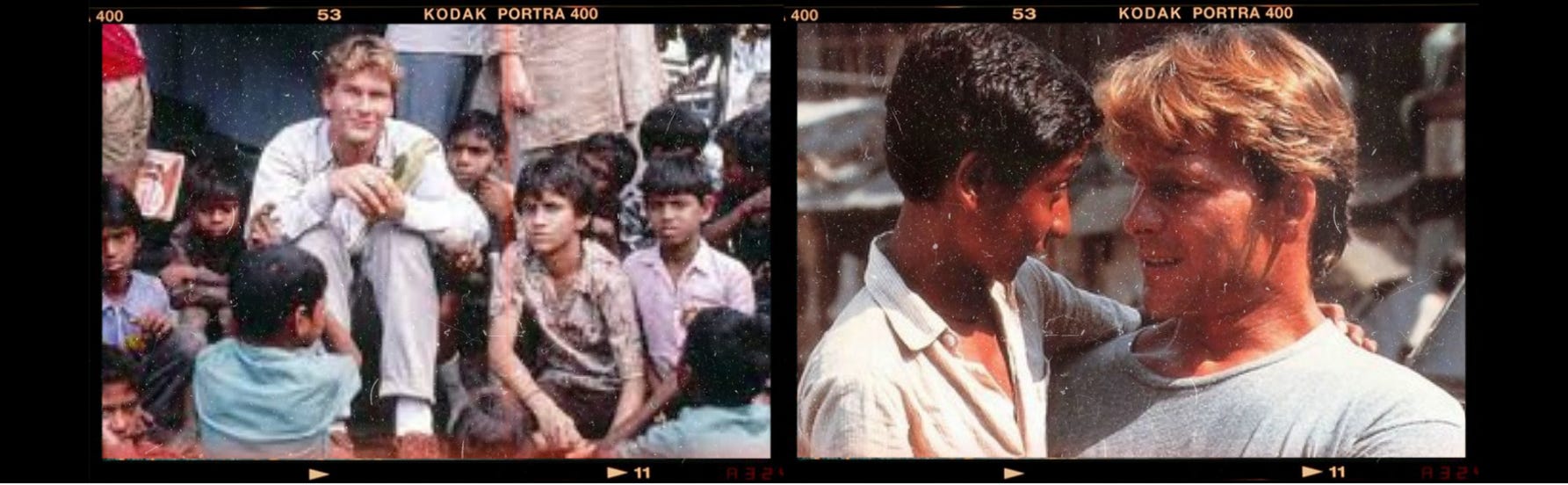
This magnificent film (even if romanticized and generalizing in our minds the living conditions of all of India to those of the slums) perfectly illustrates the power of Indian culture: even when one has nothing materially, one can live with joy in one’s heart. Or to put it another way, it is not physical comfort that brings happiness, but unconditional love in our human relationships, drawn from lofty principles of life.
Let’s delve a little deeper into this ancient culture to understand what philosophy of life it draws from, and how we too can build kind human relationships and a joyful existence despite the problems.
The central theme of Vedic philosophy is that of ACCEPTANCE. Based on the principle that everything exists in Brahman (the Creator), is nourished by Vishnu (the Inspirer), and is destined to be transformed by Shiva (the Destroyer), we exist according to a completely intelligent plan, and events occur to offer us challenges for our personal growth as well as for all of humanity, present and future. This means that everything that happens to us originates from divine thought and has been designed for the evolution of our human consciousness. Consequently, the message of the Vedic sacred texts encourages us to see our lives as part of a greater whole and to always trust in this positive evolution, rather than our primal instincts. The more we accept our existence and external events with adherence to this truth, the more our lives will be carried by a higher and more intelligent force than our limited minds allow. Consequently, by trusting in the divine plan and resisting our primitive instincts, our minds will open to this reality, which is far greater than we can currently imagine.
This is illustrated in the epic poem, the Ramayana , which is absolutely essential reading as it reflects the hidden epic of our soul. In this story (which specialists place around 5600 BC), Prince Rama, the king’s eldest son and the most admired for his extraordinary wisdom, falls victim to the jealousy of his stepmother, who uses a trick to place his younger brother on the throne instead. Instead of rebelling against this blatant injustice, becoming angry, and asserting his rights, which would put his father in an unbearable situation, Rama calmly demonstrates to everyone that he must obey his stepmother’s orders and accept the course of events, even when they are deeply uncomfortable. Condemned to exile, he must leave the palace to live alone in the forest. I don’t know if we can truly imagine what it must be like for a reigning prince to have to relinquish all his privileges and riches, to leave with nothing and learn to survive amidst wild beasts and life deep in the jungle. All because of the jealousy of a stepmother. It’s a daunting step he takes, yet without flinching, showing the entire society that what life’s circumstances dictate is divine will, and it is important to fulfill it. Rama is followed by his wife Sita, who also accepts the destiny promised to her husband. She is soon after abducted by another envious “demon.” Over the course of the epic journey, which lasts several years, Rama receives all the divine powers in his quest to bring her back, because he always follows the ” Dharma ,” or divine will; that is to say, he never reacts according to his emotions and desires for personal comfort, but according to what must be done with clarity of mind. In the story, he returns victorious to his kingdom after 14 years. The stepmother, who had acted wrongfully, has obviously perished, and his brother restores his throne to him.
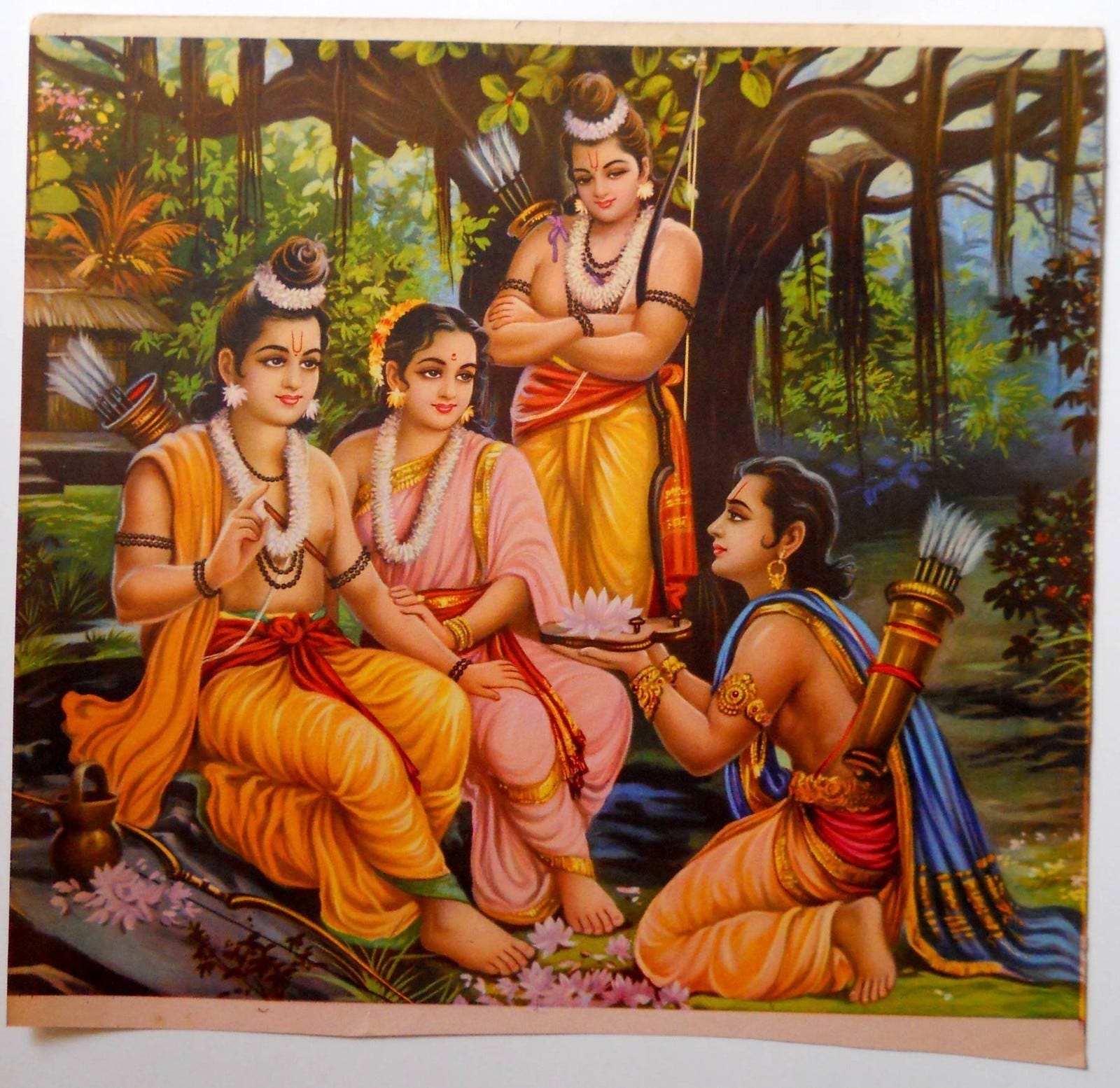
The moral of the story is that when we don’t act according to the whims of our emotions and desires for pleasure and gain, but with greater purpose for the common good, those who act wrongly (that is, who harm others for their own immediate and personal gratification) will undoubtedly go astray, while those of us who keep a clear head, detached from comfort and pleasure, will reign supreme in life. This is why we mustn’t focus on the immediate circumstances of our lives, but on the ‘big picture,’ the path toward which these events and our reactions are leading us.
We can achieve this mental distance only when we stop reacting to our emotions, and only when we see clearly our impulses and motivations.
In the philosophy that I derive from it and apply to our modern times, there are two phases to achieving such nobility of spirit:
1. The first step is to work on one’s mind at a psychological level to gain control over one’s emotions and subconscious desires. When we understand how our mind works, we become its master and can rid ourselves of the mental veil that clouds our judgment.
2. The second is to rise spiritually to achieve connection to a higher sphere of existence, which provides us with a joy and serenity of soul far superior to that which we know.
The goal of this quest is to move from a human existence limited by our mental conditioning to an enlightened, divine existence, in this life, on this earth, and within the same circumstances that surround us. What I mean is that paradise is not found in some hypothetical realm of existence after our physical death, which we cannot prove and can only hope for, but rather in this reality that we ourselves can create and fully enjoy here and now.
This is the message and method of Hindu philosophy, miraculously preserved despite millennia, successive conquests and attempts at domination, waves of opulence and poverty, and even internal dysfunctions. This philosophy has been preserved by those who, while materially poor, have maintained absolute faith in the force that guides the course of this world.
For those drawn to a brighter life, everything is there. Wisdom is infinitely profound, barely beneath the surface of what can be seen with the eyes. When one learns to see with the heart and with the will to rise above, all the answers about life and death are there. Depression and anxiety cannot exist when one views life with such perspective and wisdom.
Beneath the apparent ‘poverty’ that so frightens us Westerners lies an invaluable wealth for humanity. It is time to draw from it what our era needs.
Thank you for reading this blog, in which I attempt to offer a timeless philosophy for our troubled times. Subscribe to learn more and transform your life.